
a new technocracy
get in, we're bringing on the manufacturing renaissance

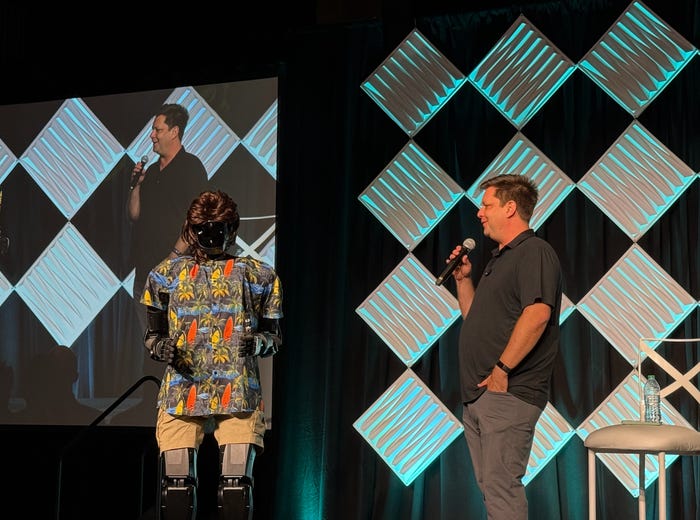
At Reindustrialize 2025, Ashlee Vance pressed Palmer Luckey hard on whether or not this grand vision for American Reindustrialization is even possible. The skepticism was palpable.
Walking through modern factories and visiting new manufacturing startups, I saw things that made me endlessly optimistic for the future. CAM programmers writing code to control million-dollar CNC machines, lean teams building greenfield verticalization, adoption of industrial robotics to automate away the dirty, repetitive work that drove production overseas initially.
We have all the ingredients now for an American manufacturing renaissance, stewarded by a new generation of technocrats, techno-industrialists and tradesmen.
How We Got Here
For decades, Silicon Valley treated manufacturing as solved and unimportant. Let other countries (especially China) handle the dirty work while we do higher-value design work. That ended disastrously for manufacturers here at home. We designed products, others figured out how to make a billion of them.
This created a generation of technologists that confused value extraction with value creation. Software is a tool to extract value from existing economic activity. Building manufacturing capabilities creates value that didn't exist before.
Neoliberalism sold us the lie that we could offshore manufacturing and keep the profitable design work. Comparative advantage theory didn’t properly account for (or ignored) the innovation spillovers and learning-by-doing that happen on factory floors. When you separate design from production, you lose jobs AND the feedback loops that drive innovation.
Between 1998 and 2010, America lost 60,000 manufacturing companies and with them an unquantifiable innovation capacity in advanced materials, precision manufacturing, and other industrial processes. Not because we couldn't design these things, but because we stopped making them.
The delusion persists today. While America lost manufacturing capacity, we doubled down on the same thinking that software will solve everything, services can replace making things, and “clean” investing means financial engineering rather than just building additional renewables capacity.
The New Technocracy
A generation of techno-industrialists is leading a broader coalition—a new technocracy with a different mindset. This cohort of builders, elected officials, educators and investors transcends traditional partisanship with a vision focused on abundance rather than divisive rhetoric. They're obsessed with creating value rather than extracting it.
Unlike the government-skeptical technocrats of previous decades, they see government as an essential player for strengthening the American economy. The techno-industrialists provide the companies and proof points. The greater technocracy provides the institutional support—strategic tariffs, matching subsidies, procurement policies that favor domestic manufacturers, and educational investment in skills that actually matter.
This coordinated effort is putting manufacturing back in the zeitgeist. They understand that the factory is the product, intentionally building deep knowledge of manufacturing process and working together, whether they’re founders of startups aiming to blitzscale capex-heavy operations or elected officials eliminating red tape to help OEMs open new plants. They know that technology is likely to create more opportunities in lower-tech, traded industries than any jobs it makes obsolete.
Elon Musk, Jensen Huang and Palmer Luckey are obvious examples that prove a software-enhanced manufacturing company can create immense value and stimulate the economy in ways we couldn’t predict.
These leaders proved to public markets that software could serve hardware instead of replacing it. But they also proved something else: co-locating design, engineering, manufacturing, R&D and more in places with manufacturing DNA drives product and process-led innovation.
Their successors are building new companies (and retrofitting older ones) with this approach from the beginning. Young engineers and technicians are building drones and robots, rethinking raw material extraction and building automation with vertical factories.
Detroit. Chicago. Cleveland. Buffalo. Pittsburgh. Austin. Denver. El Segundo and Hawthorne. We have endless cities around the US with latent industrial knowledge eagerly waiting for the next generation to rediscover it.
The Builders Are Back
A growing number of businesses are revitalizing this capacity, and gradually stripping away legacy waste, across industries with new technology. Hadrian is building verticalized aerospace component production with automated machining. Atomic Industries applies machine learning to tool, die and moldmaking that traditionally relied on decades of human intuition. Bethlehem Steel is making a comeback with a new process to make green steel. RMFG is modernizing laser-cut sheet metal and weldments. Valar Atomics is developing “gigasites” of nuclear micro-reactors. Rangeview is doing similar things for investment castings.
Nox Metals, FinalRev, Digital Metal and SendCutSend, among others, have optimized their own manufacturing processes with software for insanely fast turnarounds in cut, machined, cast and formed parts, sometimes 90%+ faster than competitors.
It started with isolated companies, but it’s quickly become a movement. Reindustrialize brings together manufacturers, technologists, policymakers, and investors who share the vision of American industrial renaissance. This year there were 1000 attendees. Factory tours are a hell of a lot more fun than pitch competitions.
A strong manufacturing community has subsequently emerged on social media, especially X (fka Twitter), where the techno-industrialists gather. It’s a place where a machinist making gears and a robotics startup founder can yap about broader manufacturing topics. People can reply “hell yeah” to pictures of steel blocks and build community around educating the next generation in the skilled trades. It’s clear there’s a community out there craving connection. And X, among other channels, has provided it.
Manufacturing is Hard
Building in the world of atoms doesn’t come without challenges. Manufacturing has real marginal costs, development cycles measured in years, and capital requirements that only seem to compound over time. From 1995-2016, only 4% of venture capital flowed to industrial hardware, and still around 90% today goes to software, chasing products with near-zero marginal cost to scaling.
Capital intensity is a major turn off for venture capitalists, who primarily look for good margins, scalability and massive addressable markets (enough for the famed multi-billion dollar exit) on relatively short time horizons. Understandable when, for example, rockets require expensive iterations on engines, fuel systems, and other manufacturing processes that can take many years.
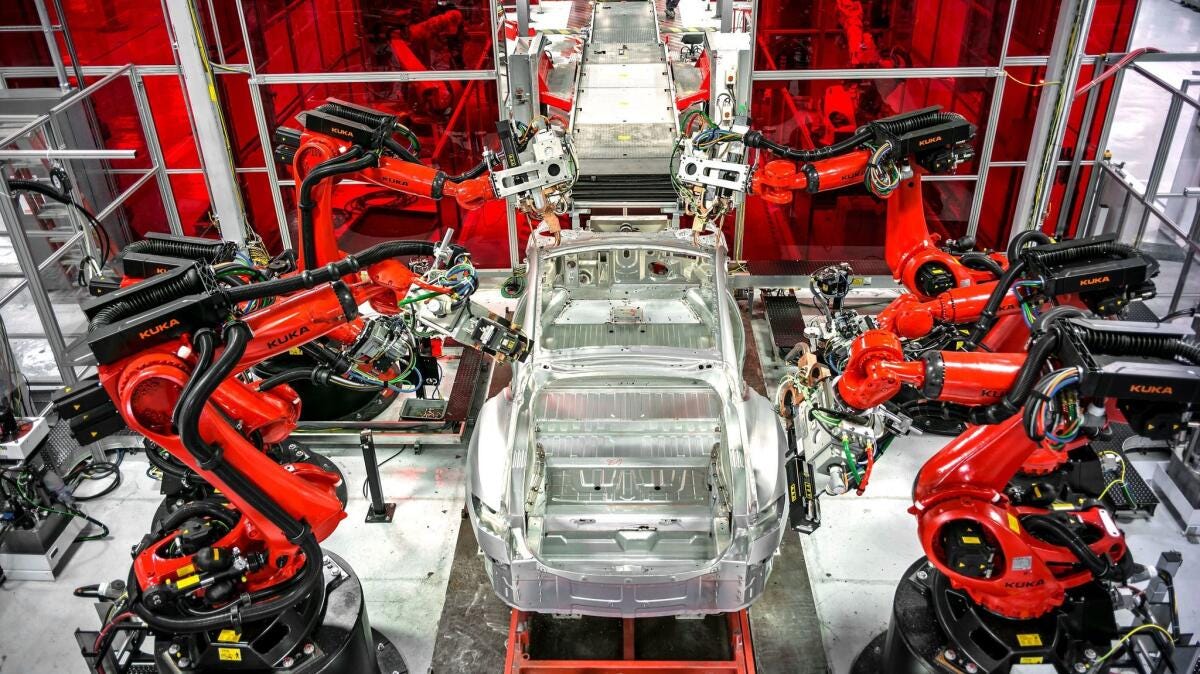
Tesla nearly went bankrupt during Model 3 production because making a million reliable copies requires mastering supply chains and quality systems that take decades to optimize. If you meet someone who survived 2017-2018 Tesla production hell, they’ve probably got some war stories.
The skeptics have legitimate concerns. Manufacturing is fundamentally harder than software, and this generation might not be different enough to overcome structural obstacles. Most manufacturing startups fail on execution, not vision. Supply chain complexity, quality control, and regulatory compliance remain brutal regardless of software optimization. Anyone who’s dealt with OSHA can tell you that.
The capital mismatch might be structural rather than cultural—manufacturing requires patient capital at scales that exist only in sovereign wealth funds, and even successful manufacturing companies often generate lower returns than tech. When the first wave of techno-industrial companies hits major setbacks, capital will likely flow back to easier software plays, so it again falls to government to incentivize or themselves take long term bets.
The skeptics aren't wrong about the challenges. But nothing worth doing is easy!
High Risk, High Reward
And so a fork in the road emerges for American technologists. One to build software that extracts value from existing systems through process automation. Another to create value by building industrial capabilities that didn't exist before (albeit with new technology).
Software still has its place in the market, and those who take a bet on hardware, on manufacturing, must do so at the cost of an easier, safer path. “Move fast and break things” in software is fine. A bug is fixable. “Move fast and break things” in manufacturing is a trip to the hospital or a missing hand. There must be a philosophical commitment to long-term abundance over short-term returns.
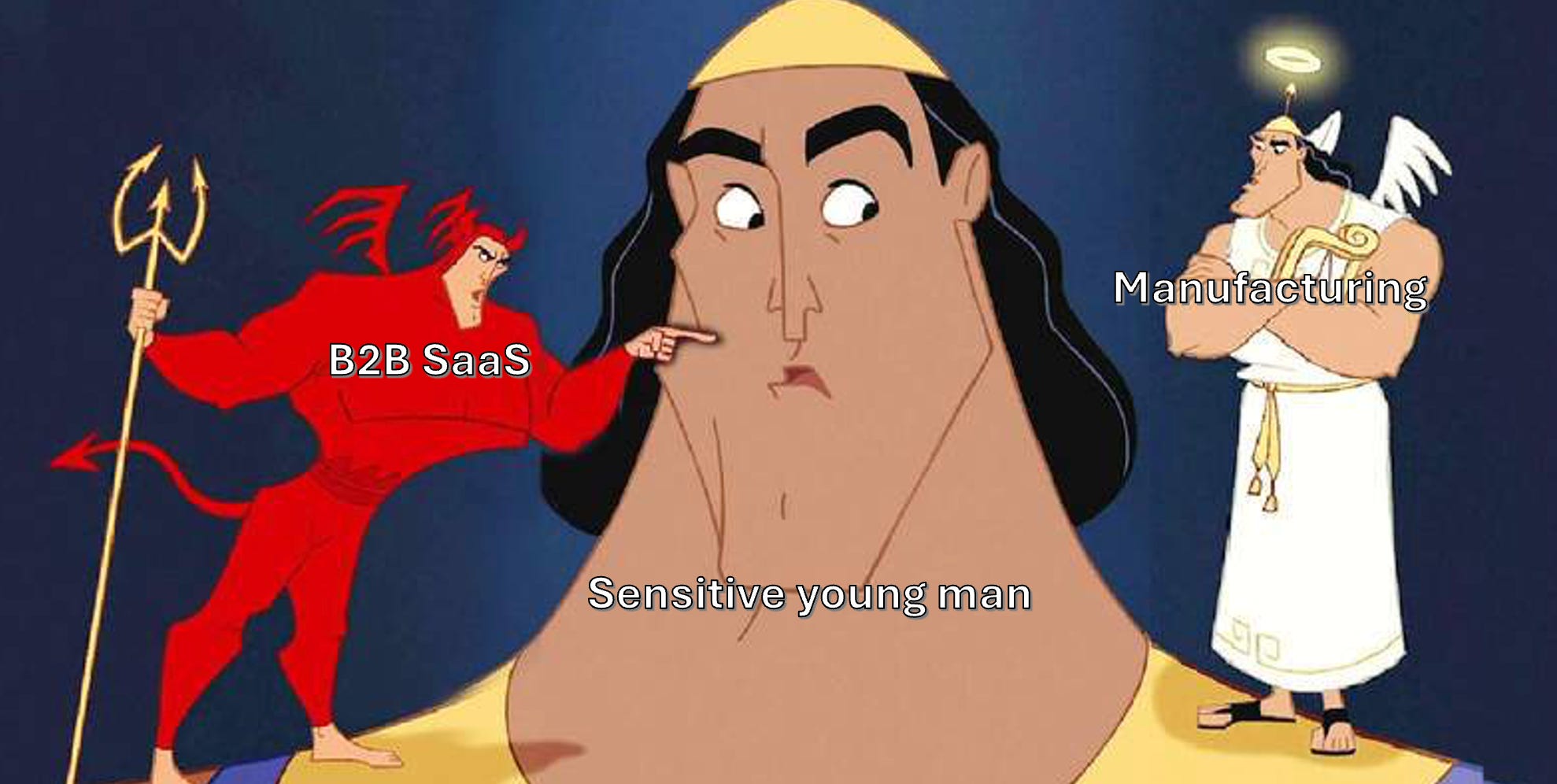
Value extraction generates higher returns faster, but there are no returns to generate when the well has dried up. I don’t have to explain why building factories is harder than building apps. A new technocracy has chosen the harder path—rebuilding America’s industrial base and capacity that compounds for decades.
A few trends are converging to making the harder path viable. We’re on the precipice of so many technology improvements, across AI, materials and much more. As of late, there seems to be an unprecedented shift in how our government is tackling industrial policy (see stake in Intel and reciprocal tariffs). I’m optimistic we’ll see a shift in investment appetite toward cash-flowing businesses with real assets instead of speculative growth models. YC recently launched a call for techno-industrial startups in collaboration with Reindustrialize. Feels like everyone has an “American Dynamism” fund now.
Why We Will Win
The skepticism at Reindustrialize wasn't unfounded. A manufacturing revival has been promised before. But this time feels different because the approach is different.
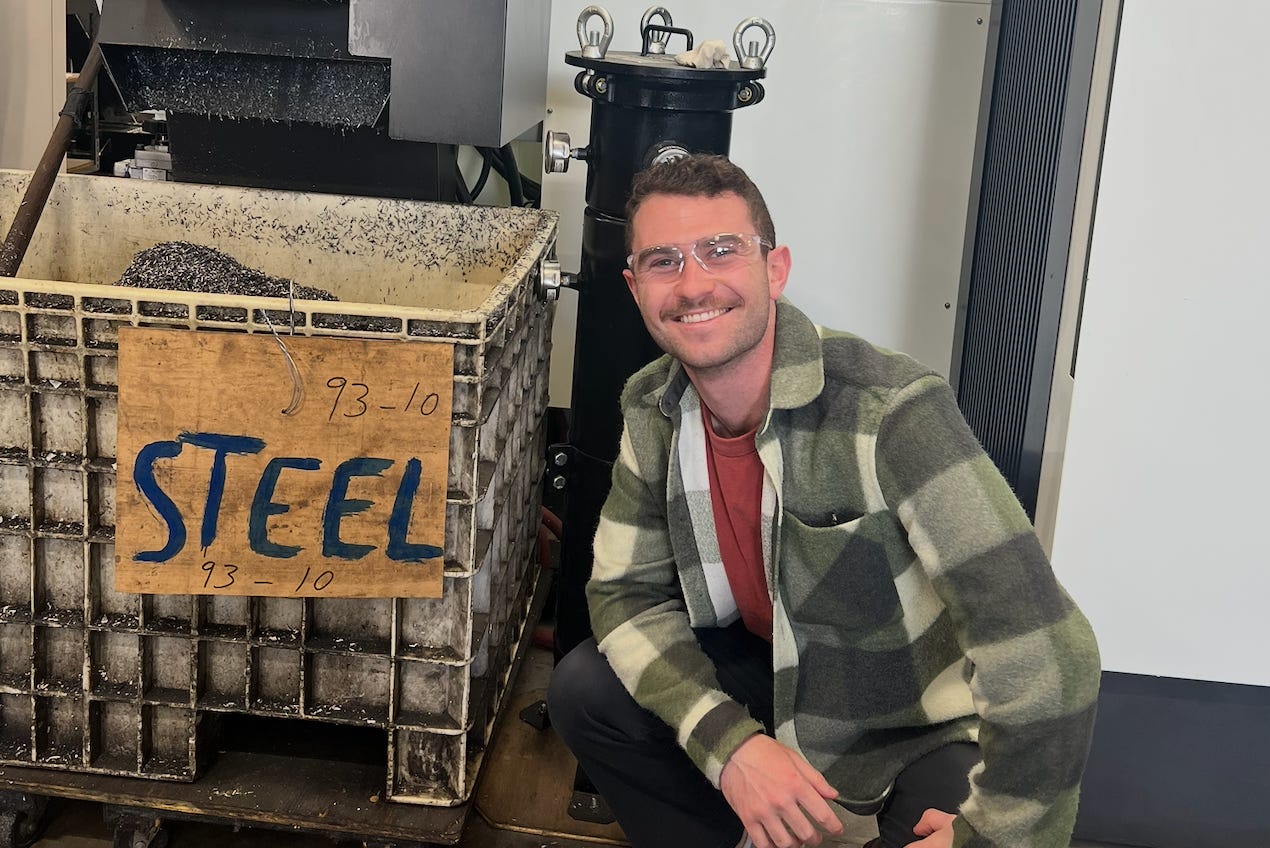
Previous waves relied on incoherent industrial policy and hoped corporations would figure it out. This generation uses software to build better factories while coordinating with government, tech, and education to align incentives.
We have structural advantages China can't replicate: entrepreneurial culture that drives bottom-up innovation, the world's deepest capital markets, federalist competition between states, and the world's largest domestic market. Companies can scale here profitably without export dumping or trade tensions.
The new technocracy isn't waiting for permission. The techno-industrialists are building companies while the broader coalition aims to create the political and economic infrastructure. They understand abundance comes from making things better, faster, and cheaper.
This doesn't fit traditional ideological boxes. It's pragmatic and pro-America: whatever policies actually work to build and strengthen America and American values, regardless of where they fall on traditional political spectrums.
The new technocracy is building that America. Are you in?